

Gua Sha, Facial Rollers and Hands: What Science Really Says
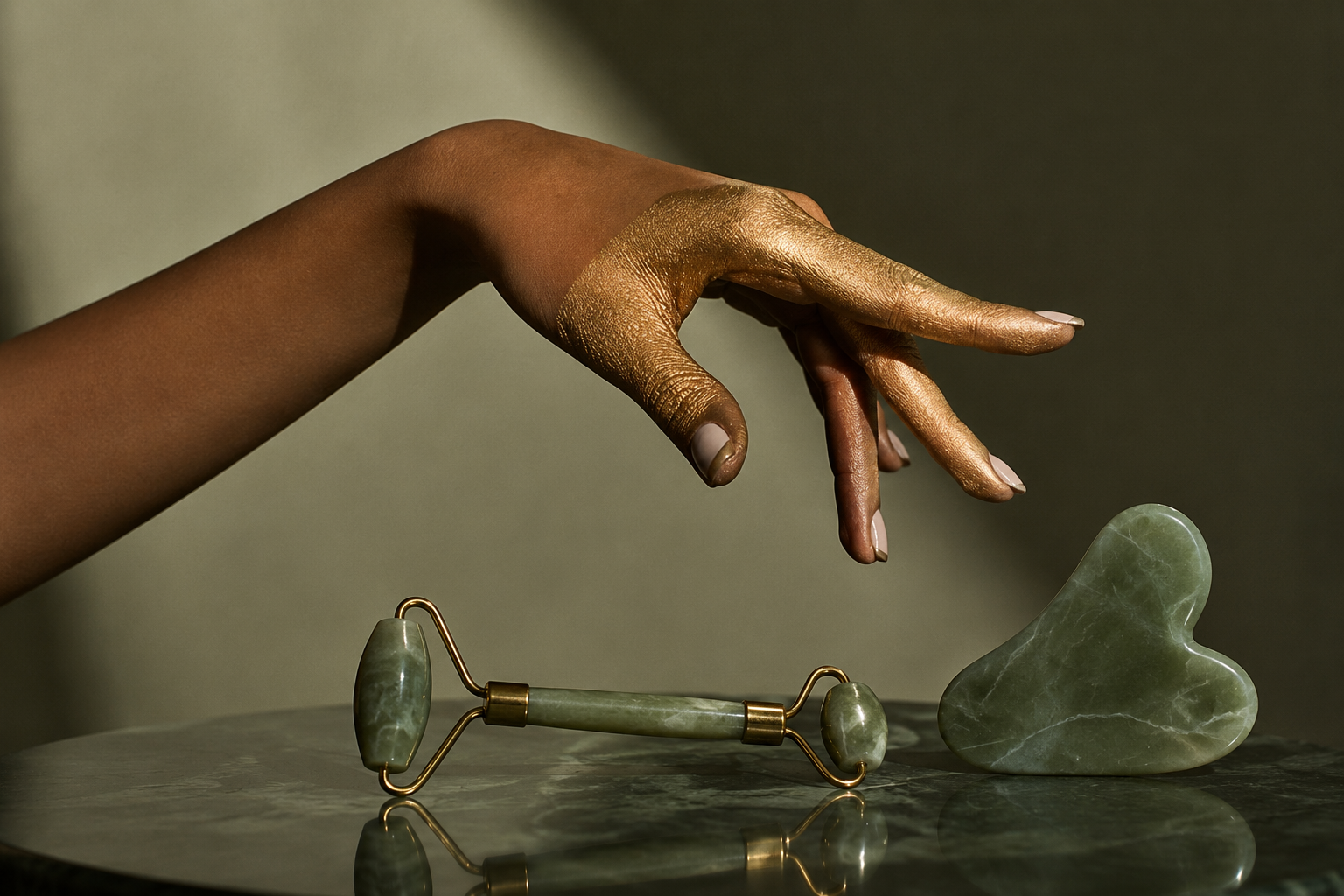
Facial massage tools are everywhere: jade rollers, rose quartz rollers, stainless steel tools, gua sha boards, sculpting wands and cooling globes. Clients see them on social media, buy them for home care and come to the treatment room asking the same question: “Do these tools really work?”
For professional estheticians, facialists and massage therapists, the better question is not whether tools work. The real question is: what exactly can they do — and what can only skilled hands do?
Modern research is beginning to confirm what experienced facial massage professionals have seen in practice for years: mechanical stimulation of facial tissues can influence blood flow, tissue tone, skin appearance and facial contours. But the result depends not only on the tool. It depends on technique, pressure, direction, rhythm, anatomical understanding and the professional’s ability to read the face.
Why facial tools became so popular
Gua sha and facial rollers became popular because they are simple, visual and easy to understand. A roller creates a pleasant cooling effect, helps reduce puffiness and gives the skin a fresher look. Gua sha feels more sculpting and intentional. It allows the practitioner to work with lines, angles, tissue tension and facial contours.
For clients, these tools create an immediate beauty ritual. For professionals, they can become part of a much deeper system: lymphatic drainage, soft tissue work, facial sculpting, relaxation and skin preparation.
But tools should not be seen as a replacement for professional hands. They are instruments. The real value comes from the specialist who understands how to use them.
What science says about facial rollers
A Japanese study published in 2018 examined the short- and long-term effects of facial roller massage on skin blood flow and vascular reactivity. The researchers found that short-term use of a facial roller increased skin blood flow after massage, while long-term use improved vascular response.
For estheticians, this is important because many visible “glow” effects after facial massage are connected with better microcirculation. When blood flow improves, the skin often looks more alive, fresh and radiant. This does not mean a roller can replace professional treatments, but it does support the idea that mechanical stimulation has a measurable physiological effect.
Facial rollers are especially useful for gentle work: morning depuffing, cooling, superficial lymphatic support, calming the skin and preparing the face for skincare products. They are easy for clients to use at home, which makes them a good recommendation between professional treatments.
However, a roller has limitations. It gives a relatively simple, repetitive movement. It cannot adapt deeply to tissue resistance. It cannot feel muscle tone, asymmetry, density, adhesions or emotional tension in the face. This is where professional hands become irreplaceable.
What science says about gua sha
Gua sha has a different character. Compared with a roller, it allows more targeted pressure, more precise angles and a stronger sculpting effect. It can be used to work along the jawline, cheekbones, neck, forehead and areas of muscular tension.
A 2025 randomized controlled trial compared facial roller and gua sha massage over an eight-week period. The study looked at facial contours, muscle tone and skin elasticity. The results showed that both methods can influence facial appearance, but through different mechanisms. Facial rollers were associated more with superficial tissue effects and skin elasticity, while gua sha had a stronger influence on muscle tone and deeper tissue properties.
This is exactly why gua sha is so valuable for professionals. It is not just a “pretty stone.” In trained hands, it becomes a tool for contouring, releasing tension and creating a visible feeling of openness in the face.
For facialists and estheticians, gua sha can be especially powerful when combined with manual techniques: neck work, lymphatic drainage, buccal massage, Kobido-inspired rhythms, sculptural massage or spa rituals.
What hands can do that tools cannot
Tools can glide, cool, press and scrape. Hands can listen.
A professional hand can feel temperature, texture, swelling, tension, muscle resistance, dryness, density and asymmetry. It can change pressure instantly. It can slow down when the tissue needs softness and become more active when the tissue is ready for deeper work.
Hands can work three-dimensionally. They can lift, stretch, drain, mobilize, hold, compress, release and sculpt. They can combine rhythm with sensitivity. They can calm the nervous system while also working with facial muscles and fascia.
This is why manual facial massage remains the foundation of high-level facial work. Tools can enhance the treatment, but they do not replace professional touch.
A roller may refresh the skin. Gua sha may support contouring. But skilled hands create the full treatment experience: diagnosis, adaptation, flow, depth and transformation.
Why technique matters more than the tool
One of the biggest mistakes in the beauty industry is selling tools as magic objects. A gua sha board does not sculpt the face by itself. A roller does not create a professional lifting protocol by itself.
The same tool can give completely different results depending on how it is used.
For example, incorrect pressure can irritate the skin. Wrong direction can make the treatment less effective. Poor understanding of lymphatic pathways can turn a beautiful ritual into random movements. Lack of anatomical knowledge can limit the result and reduce client trust.
A trained professional knows how to combine tools with anatomy, skin condition, facial morphology and client goals. This is what turns a simple beauty trend into a professional service.
The professional opportunity
For estheticians, facialists and massage therapists, the popularity of gua sha and rollers is not competition. It is an opportunity.
Clients are already interested. They already search for facial massage, lymphatic drainage, gua sha, face sculpting and natural lifting. They already want non-invasive ways to look fresher, more rested and more radiant.
Your role is to bring professional structure to that interest.
You can explain what tools can do. You can show what professional hands can do better. You can create treatments that combine manual massage, gua sha, rollers, skincare and spa rituals into a complete client experience.
This is where education becomes essential. The future of facial massage is not about choosing between tools and hands. It is about knowing how to integrate them intelligently.
Final thoughts
Science is beginning to support what professionals have known through practice: facial massage is not just a relaxing add-on. It can influence circulation, tissue tone, skin appearance and the way clients feel in their face.
Facial rollers are excellent for gentle stimulation and visible freshness. Gua sha offers more precision, contouring and work with tension. But hands remain the most intelligent and adaptable tool of all.
For modern estheticians and facialists, the strongest results come from combination: knowledge, anatomy, technique, touch and the right tools used at the right moment.
If you want to expand your facial massage menu and offer clients more visible, memorable and professional treatments, explore our Face Master Academy training bundles. Right now, you can save 35% with our bundles, making it the perfect time to invest in your skills. They are designed for beauty professionals who want to move beyond simple routines and master facial massage as a high-value professional skill.