Is Your Back Bar Helping Your Spa Treatment Profitability — or Quietly Draining It?
For many estheticians, the back bar starts with good intentions.
A new cleanser for sensitive skin. Another enzyme mask. A trending serum. A seasonal peel. A massage cream that feels luxurious. Recommendations from trainings, distributors, or коллег.
At first, it feels like growth. More products seem to mean more options and better customization. But over time, this accumulation can quietly reduce your spa treatment profitability.
Profit in esthetics is not only about how many clients you see or how much you charge. It is also about how much each treatment actually costs you. A facial can look profitable on paper and still bring less income than expected because of product waste, expired stock, or overly complicated protocols.
What Is a Back Bar in Esthetics?
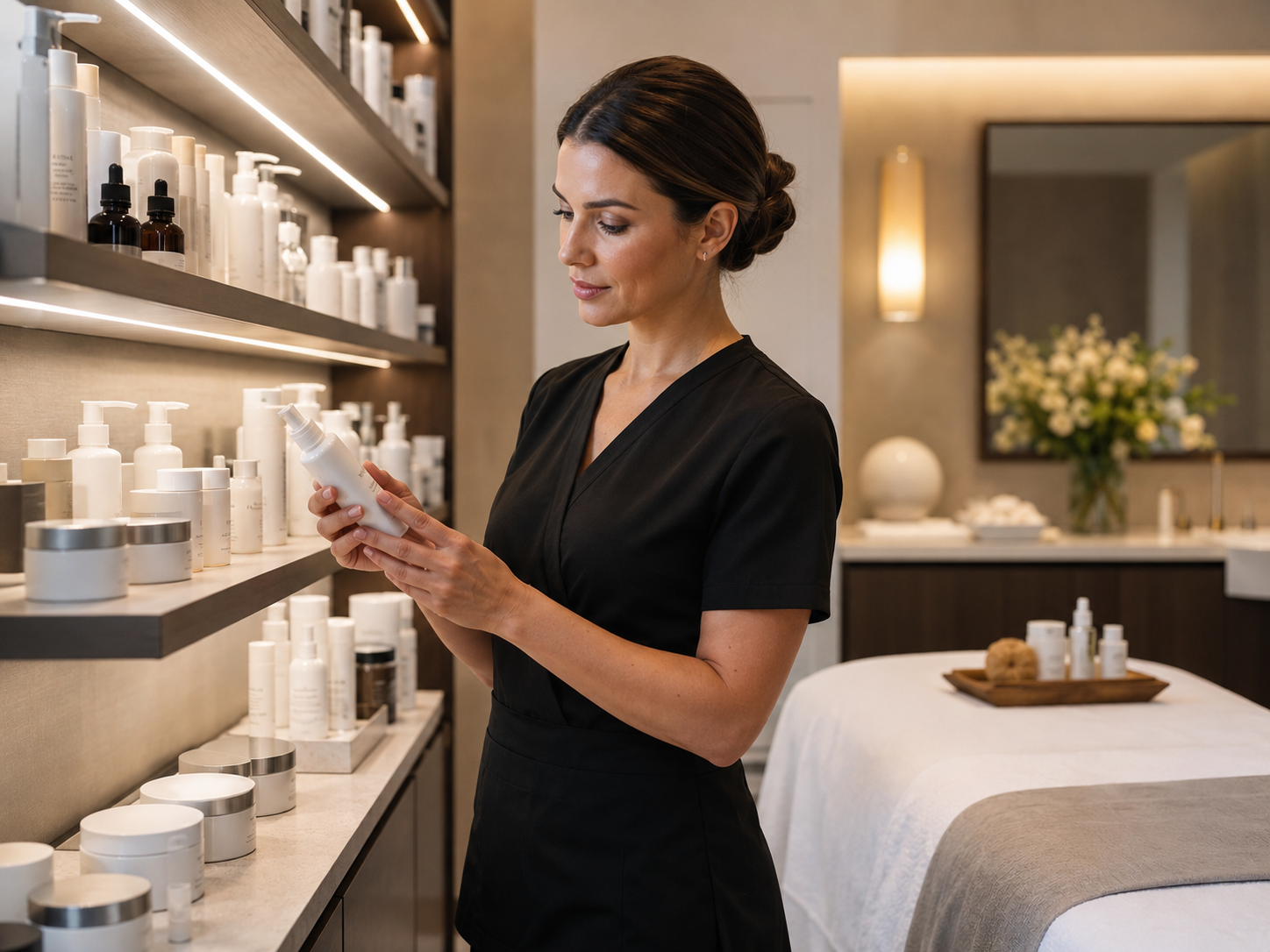
The back bar includes all professional products used during treatments: cleansers, exfoliants, masks, massage mediums, serums, finishing products, SPF, and disposables. It is not just a shelf — it is part of your business system.
When organized well, it supports consistent results and smooth workflow. When overloaded, it increases costs and makes every facial more expensive than it needs to be.
The Hidden Cost of Extra Products
Most purchases feel small. One more mask or serum does not seem critical. But the issue is not one product — it is accumulation without strategy.
A back bar becomes expensive when products duplicate each other, are rarely used, or are added without a clear role in your treatments. Over time, this leads to waste, inconsistency, and higher cost per service.
This is why even a busy treatment room can feel financially tight. Revenue is coming in, but too much of it is absorbed by unnecessary complexity.
Why Cost Per Service Matters
To understand real profitability, you need to know your cost per service. This includes products, disposables, and other treatment-related expenses.
For example, imagine a 60-minute facial priced at $120.
If your product cost is around $15, the service remains profitable. But if your back bar is overloaded and the same facial now uses $30 in products, you lose $15 per treatment.
That may not seem dramatic at first. But if you perform 20 facials per week, that becomes $300 weekly — or more than $15,000 per year.
Same service. Same price. Same effort. Completely different financial result.
More Products Do Not Mean Better Results
Clients do not evaluate a facial by how many products you use. They care about results, experience, and trust.
Too many products can actually reduce professionalism. It slows down your workflow, creates inconsistency, and makes treatments feel less structured.
A strong treatment is built on clarity, not quantity. The goal is not to use everything — it is to use exactly what is needed.
Build Treatments First, Then Choose Products
One of the most common mistakes is buying products first and building services later. A more profitable approach is to design your treatment first.
Define the goal of the facial, the client type, and the key steps. Then select only the products that support that result. This helps avoid unnecessary purchases and keeps your back bar focused.
For example, a facial massage treatment does not need a large number of active products to feel premium. The value often comes from technique, rhythm, and client experience. In this case, your skill becomes the main asset, not the number of products used.
Keep Your Back Bar Intentional
A smaller, well-structured back bar often works better than a large, chaotic one. When you know your products deeply, you use them more consistently and confidently. This improves both treatment quality and profitability.
Before adding a new product, ask yourself: what role does it play in my treatments? If the answer is unclear, it may not be necessary.
Final Thoughts
Your back bar should support your business, not quietly drain it.
A profitable facial is built on clear protocols, controlled product use, and strong professional skills. When you simplify your system and understand your numbers, your treatments become more efficient and more profitable.
In the end, success in esthetics is not about having more products. It is about using the right ones with intention.